

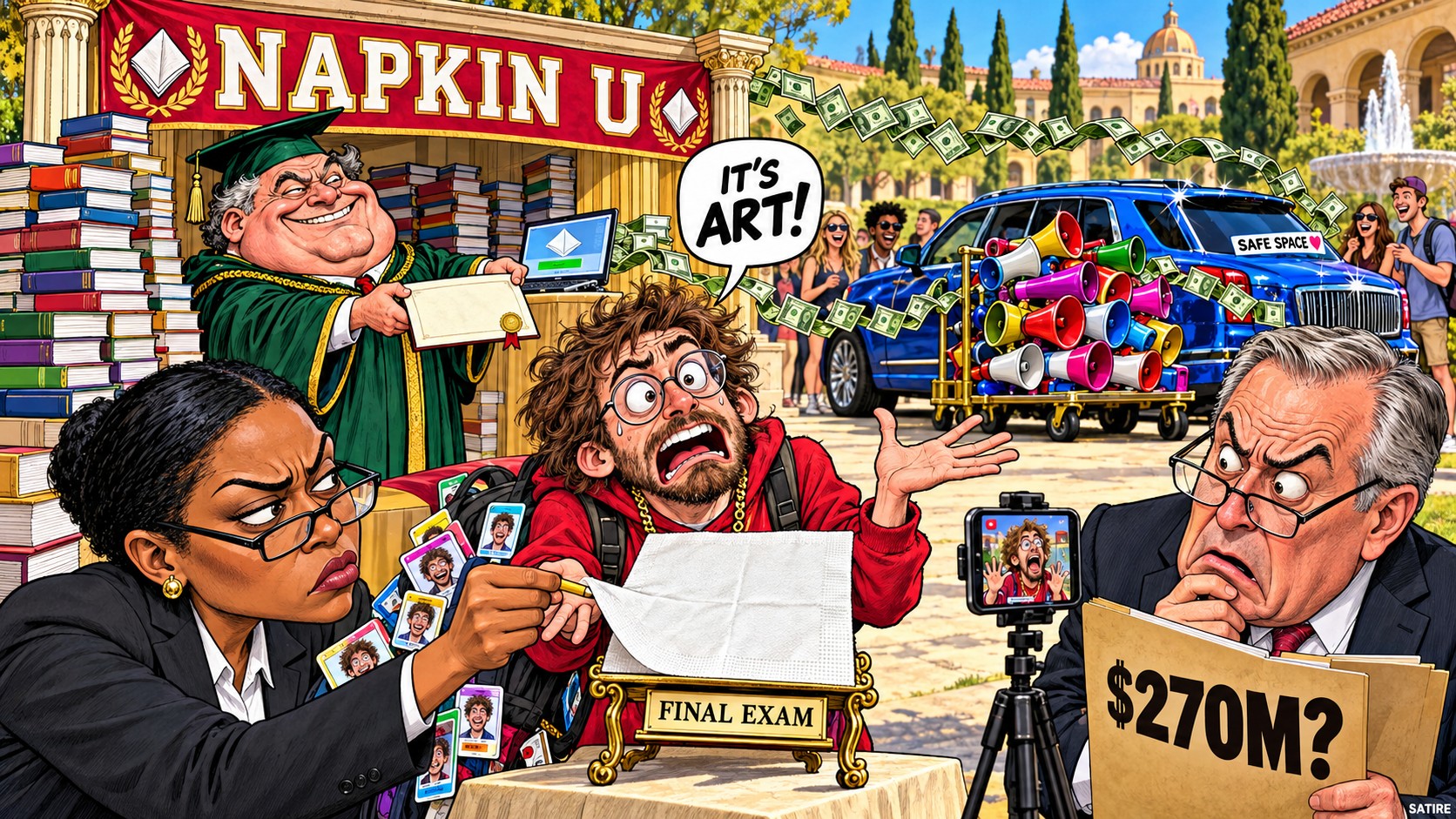
WASHINGTON: Treasury identified approximately $270 million in suspicious activity potentially linked to federal student aid fraud, prompting America’s fictional napkin scholars to declare accounting a hate crime, sources have confirmed.
At the University of Applied Grievances, students enrolled in Advanced Napkin Folding discovered that clicking “apply” paid better than clicking “attend.”
“I thought higher education meant the deposits got higher,” explained sophomore Brayden, whose academic transcript consisted of three passwords and a protest schedule.
His claimed educational expenses included tuition, seventeen bullhorns, and a leased SUV classified as a mobile safe space.
Asked why he needed seventeen bullhorns, Brayden explained that silence was violence.
Investigators found his final napkin project still flat.
“That’s a protest against expectations,” he clarified.
Another student collected aid under six identities, explaining she was exploring interdisciplinary studies.
All six majored in Being Mad at Capitalism.
The university’s financial aid director defended its screening process: applicants had to prove they were human by identifying every square containing a taxpayer.
Nobody knew what one looked like.
Administrators offered investigators an honorary doctorate if they stopped asking where the money went.
The offer was rejected.
As of press time, students had barricaded the bursar’s office with unopened textbooks, demanding Washington respect their constitutional right to receive an education they had no intention of interrupting their lifestyle to obtain.
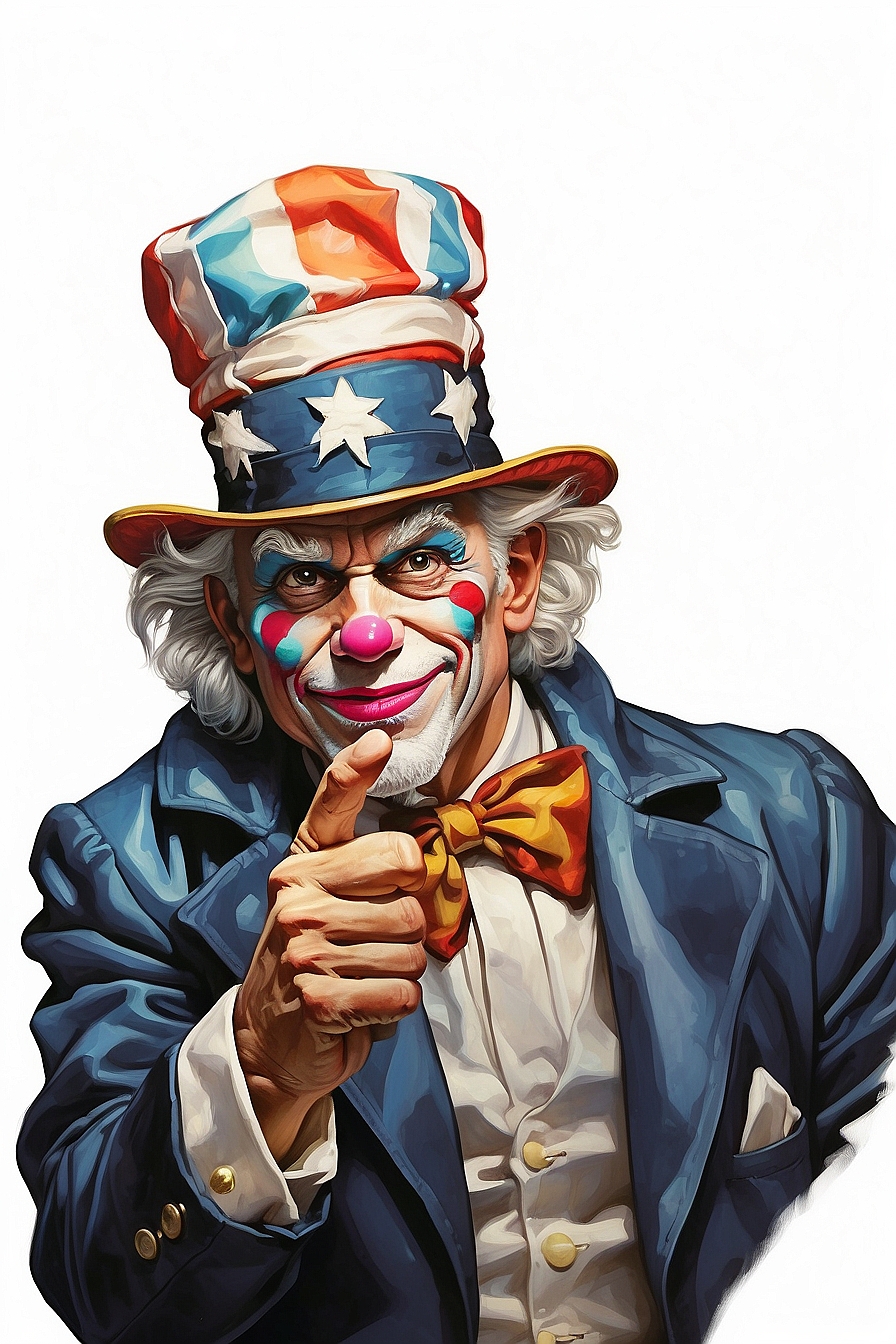

In the U.S. today, the bursar ( person responsible for student finances) is usually a relative, Daddy, in many cases, or Uncle Sam, in many others.